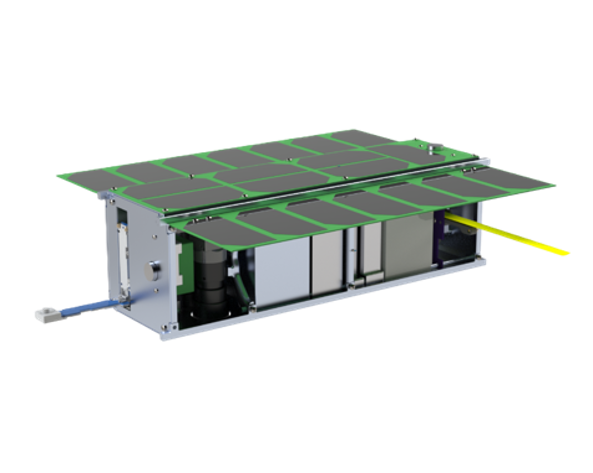
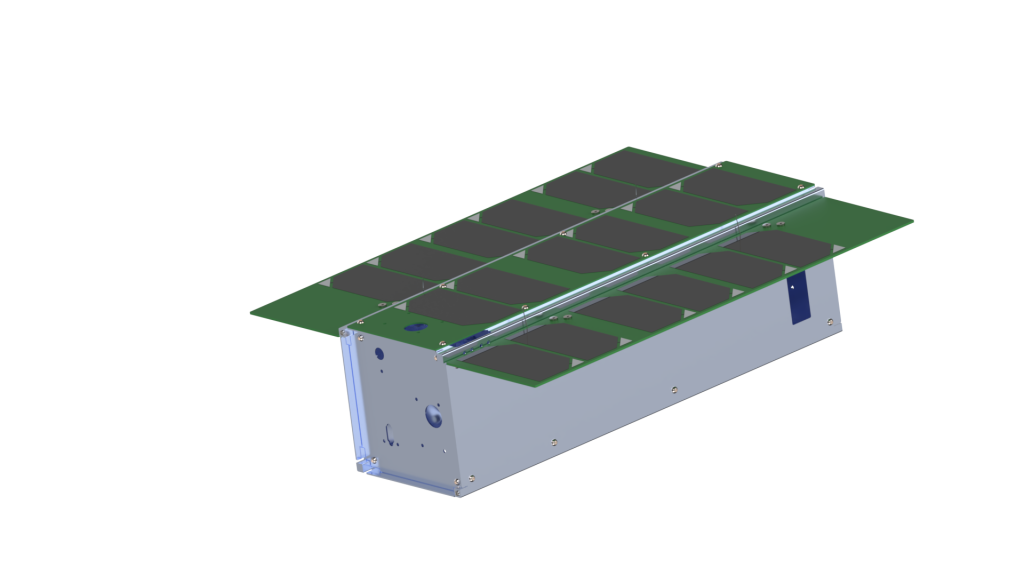
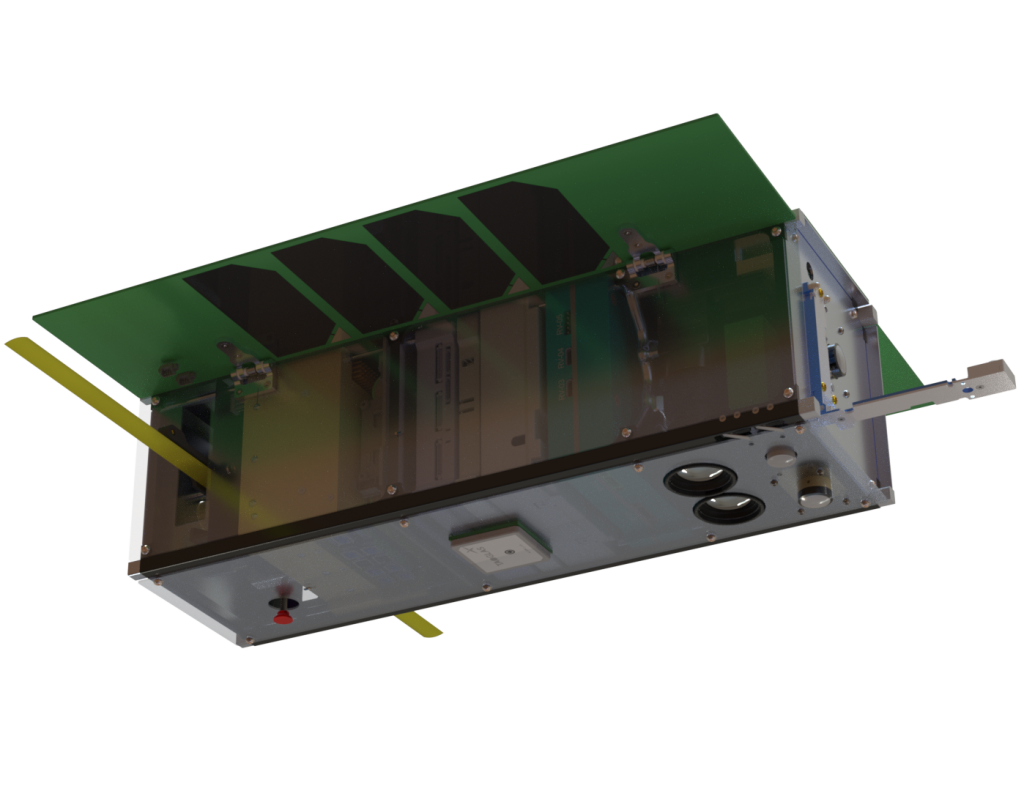
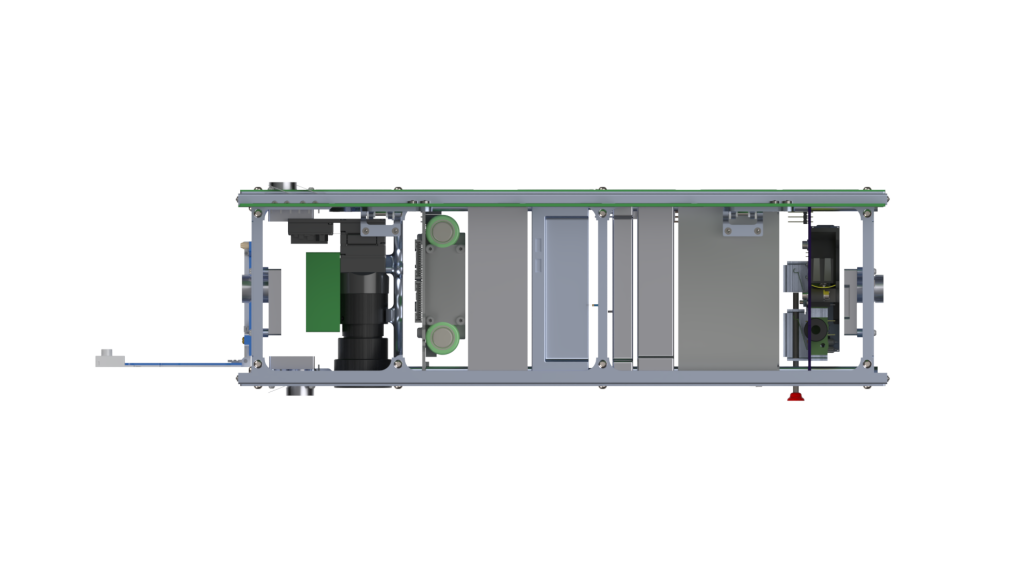
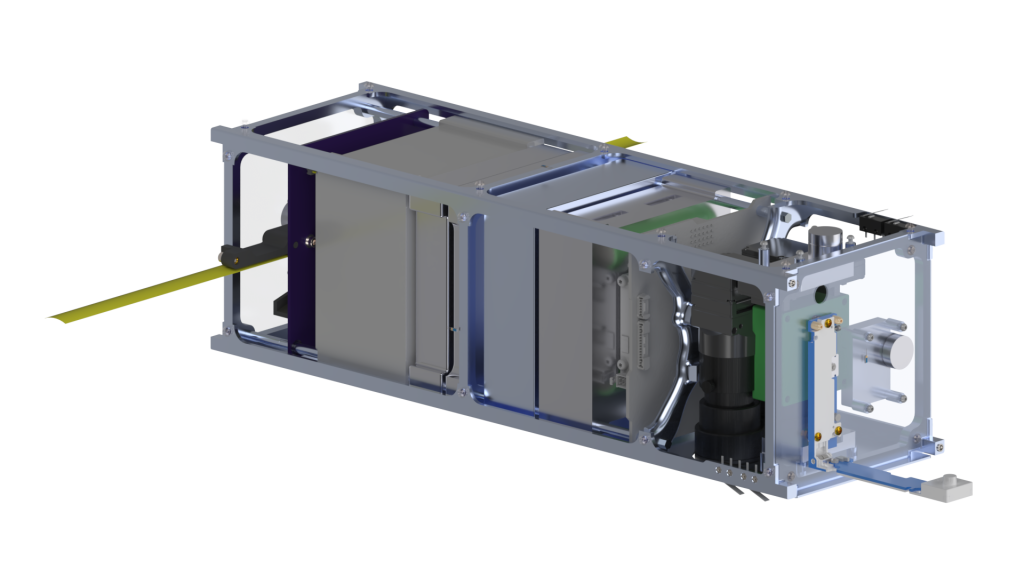
Multispectral Autonomous Natural Transformation Imaging Satellite (MANTIS) is a student designed, manufactured, and controlled CubeSat mission being developed within the Dalhousie Space Systems Lab (DSS) at Dalhousie University.
This mission is designed to demonstrate the power of autonomous Earth observation by combining multispectral imaging, onboard artificial intelligence (AI), and real-time decision making in orbit. Rather than simply capturing scheduled images for later review, M.A.N.T.I.S. is being developed to analyze data onboard during flight to identify significant environmental changes. This autonomous technology is further designed to prioritize the most valuable observations to downlink back to Earth.
By integrating advanced imaging sensors, attitude determination and control systems (ADCS), intelligent onboard computing, and custom electrical power systems, M.A.N.T.I.S. serves as both a technology demonstration platform and a hands-on engineering training mission for students apart of DSS.
The project brings together students from multiple disciplines, including electrical, electronic, mechanical, computer, and environmental engineering, as well as students studying computer science, geology, and Global Information Systems (GIS). Our wide range of expertise helps us to design, build, test, and operate a complete spacecraft from concept through launch readiness in only 5 years.
Through this mission, the team aims to advance Canadian student space innovation, develop practical expertise in satellite systems engineering, and contribute toward the future of intelligent autonomous spacecraft.
Target Launch: 2027 – Q3
A subsystem is a specialized section of a larger engineering project that is responsible for a specific set of functions. By dividing a complex system into smaller, focused subsystems, teams can develop, test, and optimize individual components more efficiently while ensuring they integrate seamlessly into the final product.
To manage the complexity of the MANTIS CubeSat mission, the project has been organized into several dedicated subsystem teams. Each team is responsible for the design, development, and testing of a particular aspect of the spacecraft, such as structures and mechanisms, communications, power, software, payloads, and systems engineering. This division allows members to develop expertise in their area while promoting collaboration between teams to ensure that all subsystems work together to achieve the mission objectives.
ADCS
Hello from COMMS, our subsystem is responsible for communicating with the satellite once it is launched; as well as obtaining all the licensing that goes along with that. Click on this section to read more about what the COMMS team does, and the hardware we use to do it.
MECH HERE
Every project is built upon the support, encouragement, and generosity of others. While the names listed below may represent individual contributions, they also reflect countless acts of guidance, patience, and belief that helped make this work possible.
We would like to express our deepest gratitude to those who shared their knowledge, offered their time, and supported us through both challenges and successes. Your willingness to help, answer questions, provide feedback, and encourage us along the way has had a lasting impact that extends far beyond the completion of this project.
No achievement is ever truly accomplished alone. We are sincerely thankful to everyone who contributed, whether through mentorship, collaboration, technical expertise, or simple words of encouragement. Your support has been invaluable, and we are honored to recognize your contributions here.
David Hillaby P.Eng