

COMMS
Ground station
Software Defined Radio (SDR)
The Ettus USRP B210 was selected as the primary radio for our ground station. This is because it provides continuous frequency coverage from 70 MHz to 6 GHz, allowing it to support a wide range of satellite communication bands. The B210’s full-duplex capability, high bandwidth, and USB 3.0 connectivity make it well suited for receiving, transmitting, and processing satellite signals in real time. Additionally, the B210‘s compatibility with GNU Radio and the open-source UHD software framework provides flexibility for future development, testing, and mission-specific customization. These features make the USRP B210 a versatile and scalable platform for our ground station setup.

Low noise amplifier (LNA)
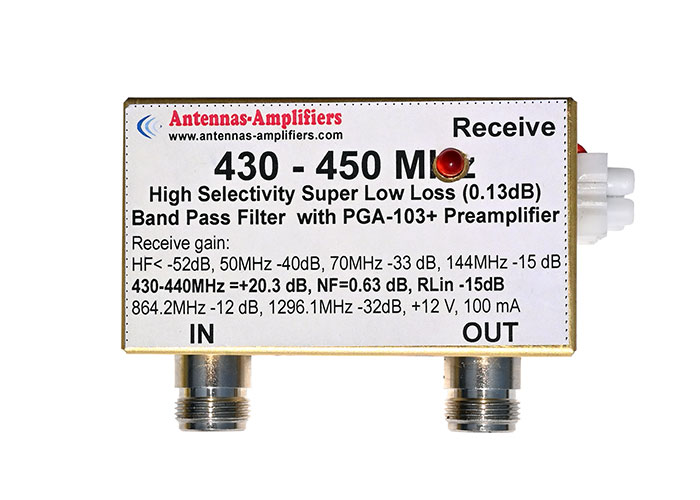
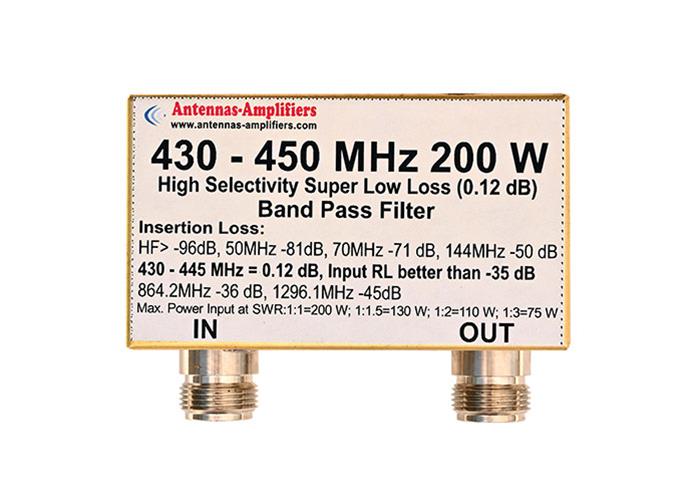
The 70 cm Low Noise Preamplifier with Band Pass Filter was selected to improve the sensitivity and reliability of the ground station’s receiving system. Operating in the 430–450 MHz range, it provides approximately 20 dB of gain while maintaining a very low noise figure of about 0.63 dB. This allows weak satellite signals to be received more effectively. The integrated band-pass filter suppresses out-of-band interference from other nearby radio signals, reducing the likelihood of receiver overload and improving overall signal quality. Its combination of high gain, low noise performance, and strong interference rejection makes it well suited for satellite communications in the 70 cm amateur radio band.
Power Amplifier
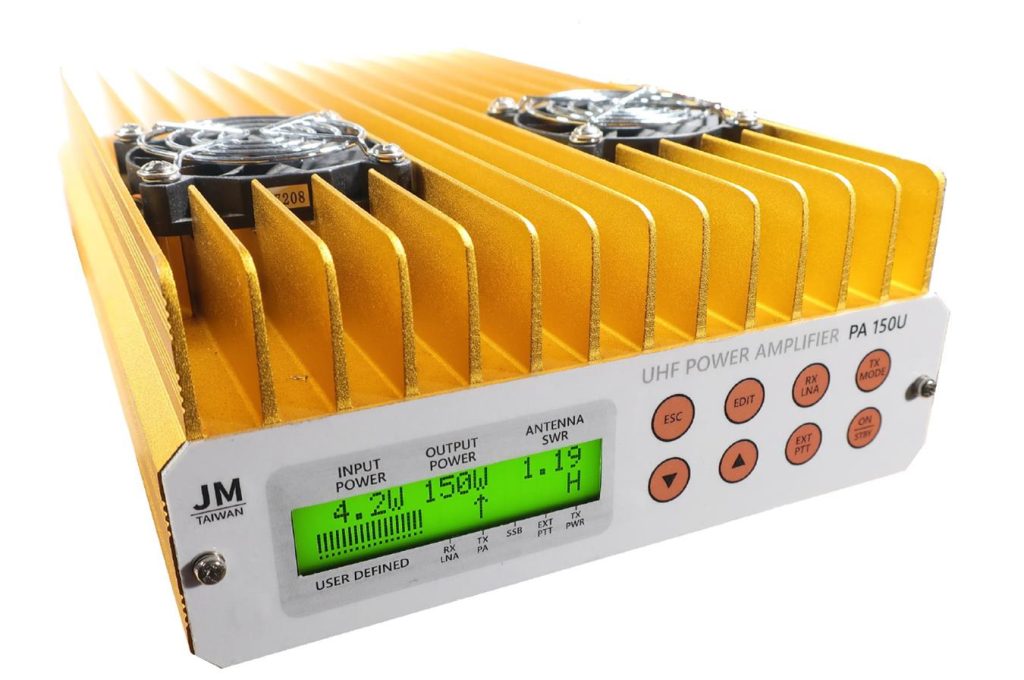
The Toptek PA-150U RF Power Amplifier was selected to increase the effective radiated power of the ground station, improving communication reliability with satellites during uplink operations. Operating across the 430–470 MHz UHF band, the amplifier can produce over 150 W of RF output from only 2–5 W of drive power, making it compatible with low-power software defined radio. The unit also includes built-in protection features such as SWR monitoring, automatic level control, and temperature protection to ensure safe and reliable operation. These features make the PA-150U a powerful and versatile solution for UHF satellite communications and ground station applications.
Preamplifier
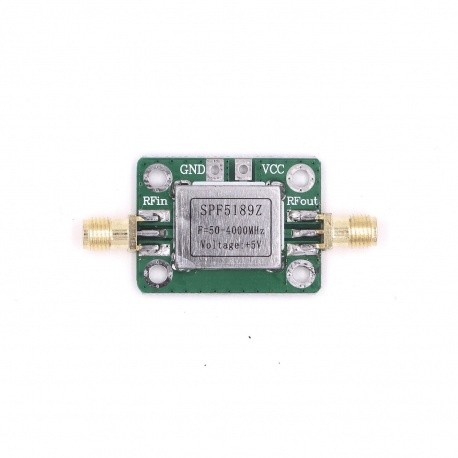
The SPF5189Z Low Noise Amplifier was selected to improve the reception performance of the ground station by amplifying weak signals before they reach the receiver. Operating across a wide frequency range of 50 MHz to 4 GHz, it is suitable for a variety of satellite communication applications and can support future system expansion. The amplifier provides approximately 15–19 dB of gain while maintaining a very low noise figure of about 0.6 dB, helping to increase signal strength with minimal added noise. These features make the SPF5189Z an effective and cost-efficient solution for improving receiver sensitivity and overall signal quality.
Bandpass filter
We selected the ATF-6530 Band Pass Filter to improve the selectivity of the ground station receiver by allowing only the desired frequency range to pass while rejecting unwanted signals. By attenuating out-of-band interference from nearby transmitters and other radio services, the filter helps prevent receiver overload and reduces the effects of intermodulation and noise. This improves the signal to noise ratio of received satellite signals and enhances overall system reliability. When used in conjunction with LNA‘s and the SDR, the band pass filter ensures that only relevant signals reach the receiver. This results in cleaner reception and more accurate signal processing.
Antenna
DSS Labs is currently in the process of selecting an antenna for use on their ground station.

on board
Transceiver
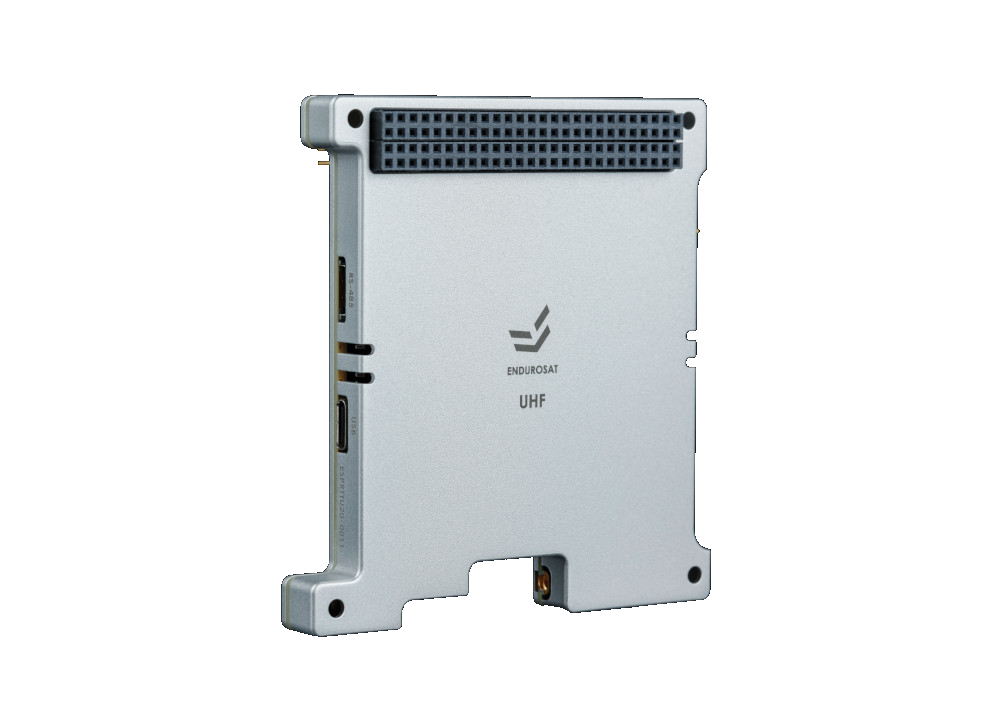
We selected the EnduroSat UHF Transceiver II for the onboard satellite communications system because it provides a compact, pretested solution for reliable telemetry and telecommand in the UHF band. Operating in the 400–403 MHz or 435–438 MHz frequency ranges, it is well aligned with common amateur and small satellite communication bands. The transceiver supports configurable modulation schemes and data rates up to around 19.2 Kbps, enabling flexible mission operations depending on link conditions. With an output power of up to 8W, integrated protections, firmware update capability, and secure communication features, it ensures robust performance in the harsh space environment. Its low mass, low power consumption, and CubeSat compatible design make it an efficient and dependable choice for onboard satellite communications.
Antenna
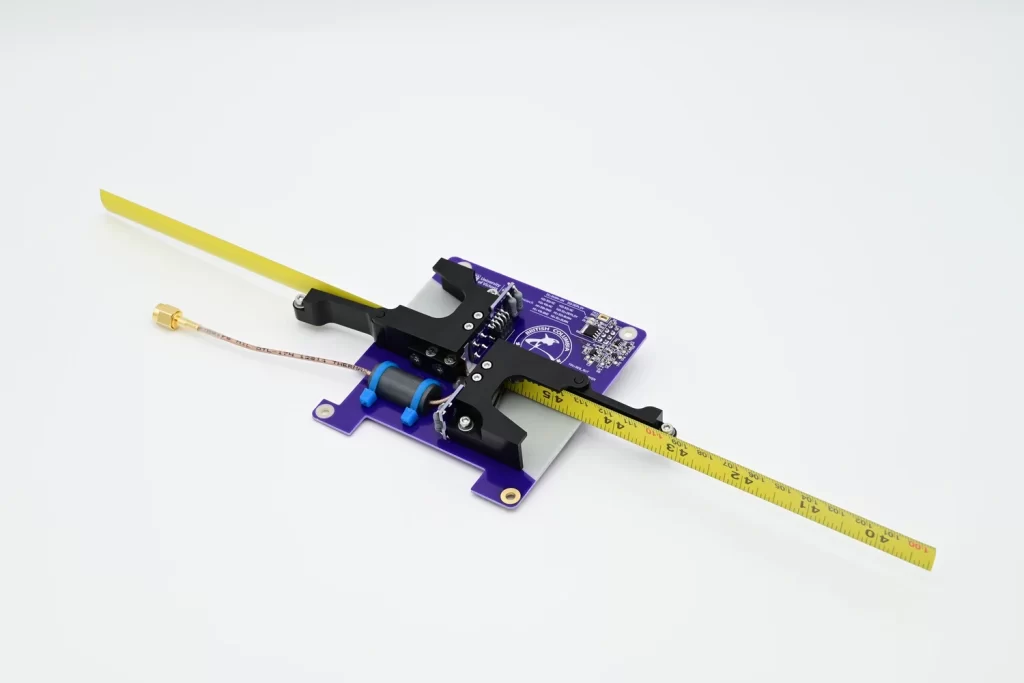
We selected the ORCASat deployable UHF dipole antenna because it is a flight proven design that ensures reliable communication between the satellite and ground stations in the 435–438 MHz amateur satellite band. The antenna uses a simple half-wavelength dipole configuration with spring steel elements that allow it to remain safely stowed during launch and reliably deploy once in orbit. This design minimizes mechanical complexity while maintaining strong RF performance, with high efficiency and a stable radiation pattern suitable for low Earth orbit operations. Its tuning and integration with the spacecraft bus ensure good impedance matching and consistent signal transmission, making it well suited for maintaining transmissions throughout the mission’s duration.
COMMUNITY INVOLVEMENT
As members of the Dalhousie University community, we are proud to contribute to hands on learning opportunities that extend beyond the classroom. DSS provides students with practical experience in electronics, communications systems, signal processing, and problem solving while fostering collaboration across engineering, science, and technology disciplines. Through projects, demonstrations, and outreach activities, we help connect students with real-world applications of wireless communication and spacecraft technology.
Amateur radio thrives through cooperation and knowledge sharing. We work alongside and maintain connections with amateur radio clubs throughout Nova Scotia. These organizations provide opportunities for licensing, technical training, emergency communications, and mentorship. By supporting local clubs and participating in community events, we can help strengthen the regional amateur radio community and encourage new operators to get involved in the hobby.
Scouting organizations have a long history of promoting communication, technology, and outdoor skills; values that closely align with amateur radio. We support youth engagement by introducing Scouts to radio communications, electronics, and satellite operations. Through demonstrations and educational outreach, we aim to inspire the next generation of operators and technology enthusiasts while helping local youth develop practical communication skills.
Frequently asked questions (faq's)
The communications (COMMS) subsystem is one of the most critical components of any satellite. We are responsible for enabling reliable data exchange between the spacecraft and the ground station at Dalhousie.
Data transmissions are done through very high frequency (VHF) radio waves that are sent from the satellite to our ground station, or vice versa. For this reason, COMMS members are obtaining amateurs radio (HAM) licenses to operate and maintain a ground station.
RAC Endorsement – The Radio Amateurs of Canada (RAC) is a national organization for amateur radio operators in Canada. Having an endorsement from RAC aids in signing up for HAM radio examinations and acquiring call signs.
IARU License Application – The International Amateur Radio Union (IARU) gives permission for amateur radio operators and stations to operate with other countries. Additionally, the IARU gives us the frequencies we use for transmissions to our satellite, as they are responsible for international band plans and radio spectrum protections.
ITU API Parameters – The International Telecommunications Union (ITU) releases Advanced Publication Information (API). This is a set of guidelines, further defining telecommunications and orbital characters, that must be followed by our satellite. As a team, we must submit our plan to follow the parameters, and the ITU allows other national administrations to view it.
ISED Regulations and Licensing – Innovation, Science and Economic Development Canada (ISED) require rigorous regulations and licensing for CubeSat Satellites. This includes radio frequency and spectrum licensing to transmit and receive data, an orbital debris mitigation plan, including a de-orbiting timeline, remote sensing and export controls for payload missions, and lastly, launch plans and vehicles (via a launch provider like SpaceX or Rocket Lab).
RSSA License – The Remote Sensing Space Systems Act (RSSA) License must be obtained from Global Affairs Canada by law prior to launch or data collection. This ensures that the satellites optical cameras or radar do not jeopardize national security, defense, or Canada’s international relations with other governing bodies. It also requires that operators implement cybersecurity and cryptography protocols to prevent remote sensing imagery from falling into unauthorized hands.
Data transmissions include all collected data from the satellite to the operator; as well as any instructional data from the operator to the satellite. Downlink data from the satellite includes telemetry data, command reception, beacon operation, and payload data throughout the mission lifetime. Uplink data from the ground may include commands for the satellite to send us specific data, pinging the satellites’ location or altitude, data or systems check-ins on the satellite, a possible targeting functionality for the satellite payload, and possible ability to update software remotely.
Hardware used for the onboard communications system utilizes the EnduroSat UHF Transceiver II in combination with an open-source ORCASat deployable UHF antenna. Together, these components provide compact and efficient communication for low Earth orbit (LEO) operations in the 70 cm amateur radio band.
Our ground station is designed around a high-performance, software-defined radio (SDR) architecture. Hardware we are using includes the Ettus Research USRP B210 SDR, low-noise amplifier (LNA), bandpass filtering, and a high-power uplink amplifier to ensure bidirectional communication with the satellite. Furthermore, the ground station antenna will be mounted on a rotating assembly atop the tallest building at Dalhousie.
Together, these systems form a completed radio communication architecture capable of supporting reliable command, telemetry, and data transfer operations during satellite passes.
m.a.n.t.i.s GIthub
m.a.n.t.i.s youtube