M.A.N.T.I.S. - Mission
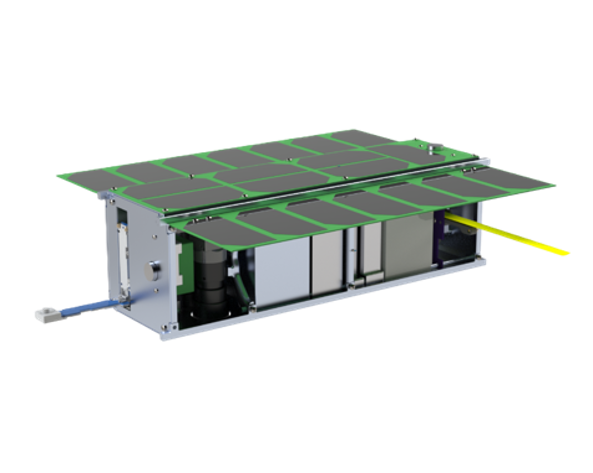
M.A.N.T.I.S. – Multispectral Autonomous Natural Transformation Imaging Satellite is a student-led 3U CubeSat mission being developed by the Dalhousie Space Systems Lab (DSS) at Dalhousie University.
The mission is designed to demonstrate the power of autonomous Earth observation by combining multispectral imaging, onboard artificial intelligence, and real-time decision-making in orbit. Rather than simply capturing scheduled images for later review, M.A.N.T.I.S. is being developed to analyze data directly onboard, identify significant environmental changes, and autonomously prioritize the most valuable observations for downlinking.
By integrating advanced imaging sensors, attitude determination and control systems (ADCS), intelligent onboard computing, and custom electrical power systems, M.A.N.T.I.S. serves as both a technology demonstration platform and a hands-on engineering training mission.
The project brings together students from multiple disciplines—including electrical, electronic, mechanical, computer and environmental engineering, computer science, geology, and Global Information Systems (GIS) – to design, build, test, and operate a complete spacecraft from concept through launch readiness.
M.A.N.T.I.S. reflects a modern, lean engineering philosophy: rapid iteration, practical testing, and incremental capability growth to achieve meaningful spaceflight readiness within an academic environment.
Through this mission, the team aims to advance Canadian student space innovation, develop practical expertise in satellite systems engineering, and contribute toward the future of intelligent autonomous spacecraft.
Mission Objectives:
- Demonstrate autonomous onboard image acquisition and analysis
- Validate multispectral Earth observation from a 3U CubeSat platform
- Develop and flight-test custom spacecraft subsystems alongside commercial space hardware
- Train the next generation of Canadian aerospace engineers and mission operators
- Establish a scalable platform for future autonomous remote sensing missions
Target Launch: 2027 – Q3